
Radnor Township City Directory Holdings
Radnor does not have a verified, continuous municipal city-directory run under one title. The strongest documented starting point is the Directory and Blue Book of Wayne and St. Davids for 1899 and 1904. The Radnor Historical Society identifies those books as resident and business listings, with Wayne Title & Trust Co. advertising. A circa-1907 Delaware & Atlantic telephone listing is another dated local clue. Those short runs matter because they sit between recorded land transfers and later released census snapshots. Treat them as dated evidence, not as a complete annual roll of everyone who lived in Radnor Township. Keep each item tied to its repository and inspect the original before relying on a detail.
| Collection | Documented span | Keeper or location | Useful access route |
|---|---|---|---|
| Directory and Blue Book of Wayne and St. Davids | 1899 and 1904 | Radnor Historical Society reference collection | Confirm the underlying item and its access with the Society. |
| Delaware & Atlantic Telephone Listings | Circa 1907 | Historical Society Bulletin reference | Inspect the original scan before relying on its fields. |
| Subject files | Circa 1860-2014 | Radnor Historical Society | Use the Streets, Estates, and Genealogy series for leads. |
| Manuscript collection | Selected material from 1702 through the twentieth century | Radnor Historical Society | Contact the repository about deeds, daybooks, and property records. |
| Historic photos and documents | Multi-year digitization project | Radnor Historical Society online archive | Search by building, category, place, or surname. |
| Annual Bulletins | Published from 1950 forward | Radnor Historical Society | Search historical PDFs for roads, families, and businesses. |
| Local library materials | Exact shelf run not posted online | Radnor Memorial Library | Ask staff about directories, phone books, yearbooks, and databases. |
The Historical Society's Directory and Blue Book reference documents the two verified years used in this Radnor Township research trail.
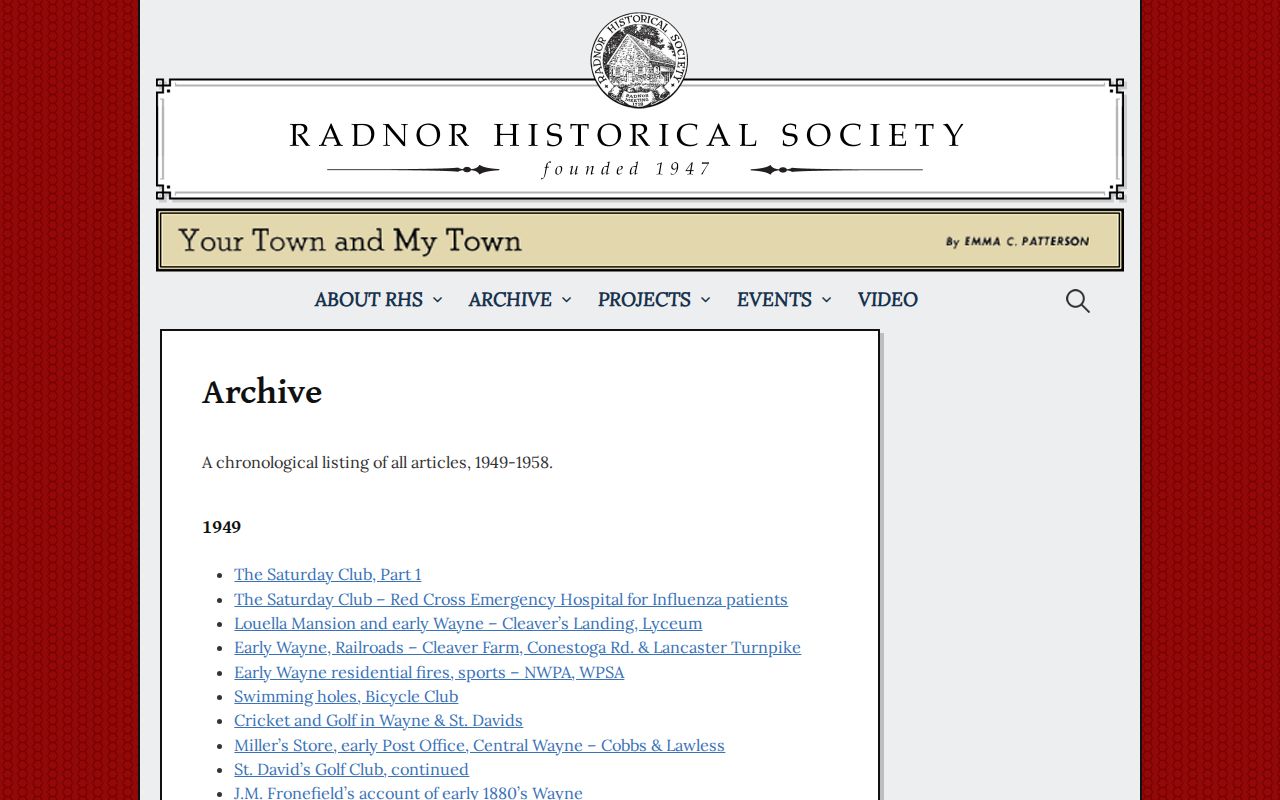
The reference supports the title, years, and local scope, but it does not supply permission to assume generic directory columns that were not visible in the source.
Radnor City Directory Name Variants
A Radnor Township historical search must rotate the place names used at the time. Older material may be cataloged under Wayne, St. Davids, Villanova, Ithan, Garrett Hill, Rosemont, or Bryn Mawr rather than under Radnor Township. Wayne is a planned-development and postal label within or associated with the Township, so an entry filed there is not automatically outside the local history. This records geography is especially important when a surname has little context or an address later changed its community label.
The Township history describes Radnorville becoming Ithan, Garretville becoming Garrett Hill, and Cleaver's Landing developing into Wayne after the Louella and Anthony Wayne era. Use the directory title words and period maps before deciding that a person vanished from the record. A missed label is common. A missing year is still a gap, not proof of continuous residence or a move.
Note: Copy the community label exactly, then search the alternate labels separately before drawing any conclusion about a household.
Radnor City Directory Society Files
The Radnor Historical Society supplies the deeper shelf behind the printed volumes. Its University of Pennsylvania finding aid describes 27 linear feet of subject files, dated about 1860 to 2014, with separate Streets, Estates, and Genealogy series. The material is mainly clippings, photocopies, printed matter, and ephemera, with original photos, blueprints, correspondence, and primary documents as well. These files can help explain a family, estate, road, or business found in a directory, but they are not a substitute for a recorded deed or a complete household list.
The University of Pennsylvania finding aid outlines the scope of the Radnor Historical Society records before an in-person inquiry.
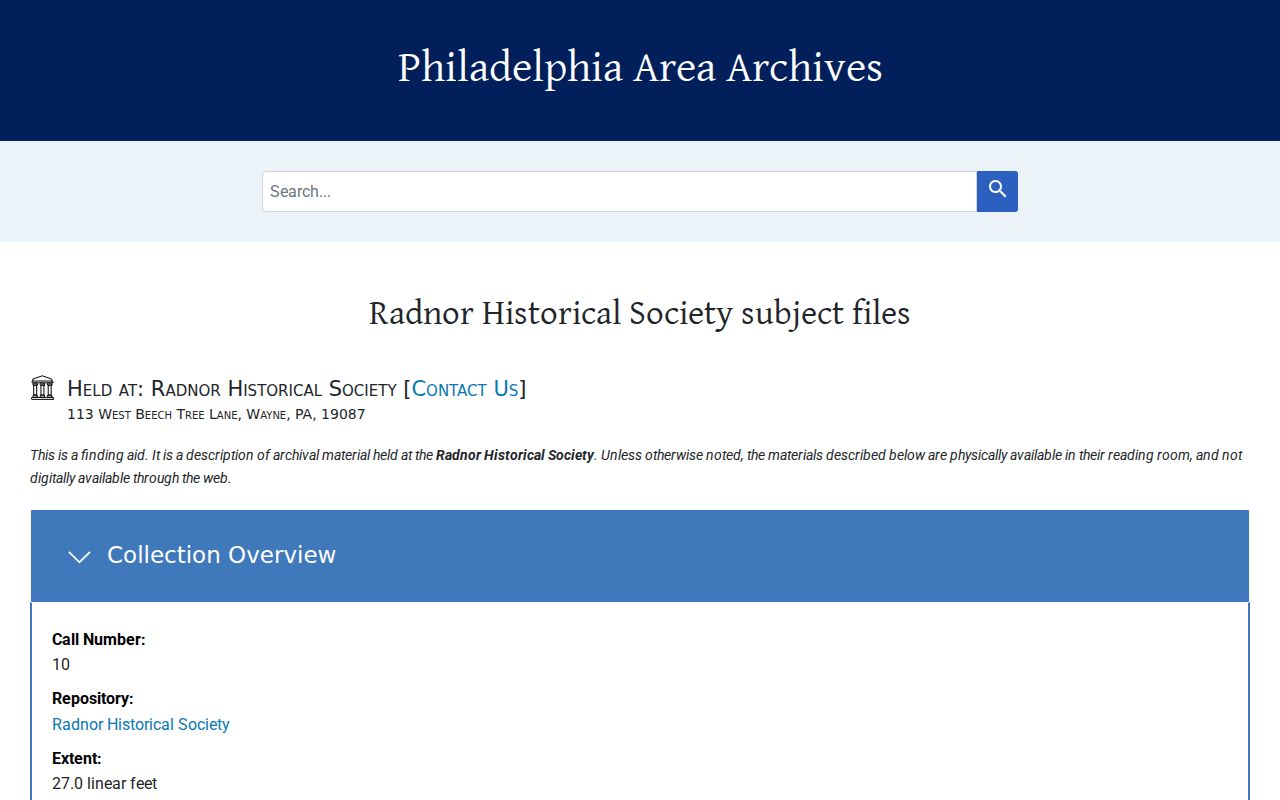
Confirm availability with the Society at 113 West Beech Tree Lane in Wayne before visiting, since a finding aid describes a collection rather than guaranteeing immediate access to each file.
Read a Radnor Township City Directory Listing
The source capture verifies that the 1899 and 1904 Blue Books list residents and businesses, but it does not show a readable individual entry. A careful Radnor Township transcription should therefore stay narrow. Capture the surname or business name, the printed address, the directory year, and the community title. Preserve initials and punctuation. Do not add an occupation, spouse, owner mark, telephone number, or abbreviation meaning unless the original page actually shows it.
| Name or business | Record the spelling and initials as printed. It is a search lead, not automatic identity proof. |
|---|---|
| Printed address | Copy it exactly, including the community label and any unusual street wording. |
| Directory year | Keep the volume year with every note so later comparisons remain dated. |
| Community title | Retain Wayne or St. Davids when that is the book's wording instead of silently converting it to a modern label. |
| Business connection | Note it only when the actual listing identifies a business; it does not prove a full household. |
- Householder evidence
- A dated listing that connects a printed name or business to an address. It may not name every person in a household.
- Index
- A finding tool that points to a record or page. An index result is not the same as the original item.
- Place-name variant
- An older community or postal label that can lead to the same geographic area under different catalog wording.
When a modern address question takes priority over historical reading, the address-first record sequence belongs on the Radnor Township street directory page.
Trace a Radnor Township City Directory Household
Use each directory clue as one dated point. Begin with every contemporaneous local label, then compare what the book prints with independent records. Federal census material follows a 72-year release rule and is a household snapshot, not an annual address book. The Pennsylvania Historical and Museum Commission guides researchers to census, vital, county, municipal, naturalization, and map paths when a directory year leaves a gap.
- Search the surname, initials, business name, and all relevant community labels in the 1899 or 1904 directory material.
- Copy the address and year exactly, then check the circa-1907 telephone-listing reference where it may provide another dated connection.
- Compare the address or party name with a Recorder instrument and the county parcel route, keeping the legal description when available.
- Pair the dated listing with the appropriate released federal census to compare household composition for that enumeration.
- Ask the Historical Society for Street, Estate, or Genealogy files under both the street and the family name.
- Use probate, obituary, church, cemetery, or newspaper research as a later lead only when the relevant repository can confirm it.
A person absent from one source may have moved, been unlisted, used a different spelling, or simply fall in an uncovered interval. Label that uncertainty. The historical directory collections should connect evidence, not erase the gaps between it.
Radnor City Directory Map Checks
Maps provide the bridge when a printed address looks unfamiliar. Documented local series include the 1848 Ash map, 1868 Barnes map, 1870 and 1875 atlases, 1881 Pennsylvania Railroad atlas material, 1892 Radnor and Wayne maps, and 1902 and 1908 Baist atlas material. The Historical Society's Historic Resource Survey also records historic name, address, year built, alterations, and district information for many resources. A map can explain a road, village, or development era. It does not itself establish occupancy.
Use the map to compare intersections, estate names, road alignment, or a parcel's legal description. Then return to the directory, Recorder, census, or Society file for evidence about a particular person. No confirmed Radnor-wide street-renumbering year was located, so a modern number should never be forced onto an old listing.
Radnor City Directory Daybook Context
Some of Radnor's most useful historical people clues sit outside a printed listing. The Historical Society manuscript materials include a 1702 William Penn deed, a builder daybook from 1835 to 1854, a general-store daybook from 1839 to 1881, and Walter Bassett Smith builder ledgers from about 1900 to 1920. The Radnor Overseers of the Poor account book, dated 1765 to 1807, is another archival people record. These sources add house, work, family, and community context that a short directory listing cannot supply.
The Historical Society's searchable photo and document archive reports 5,203 unique photos and albums, with building and category browsing.
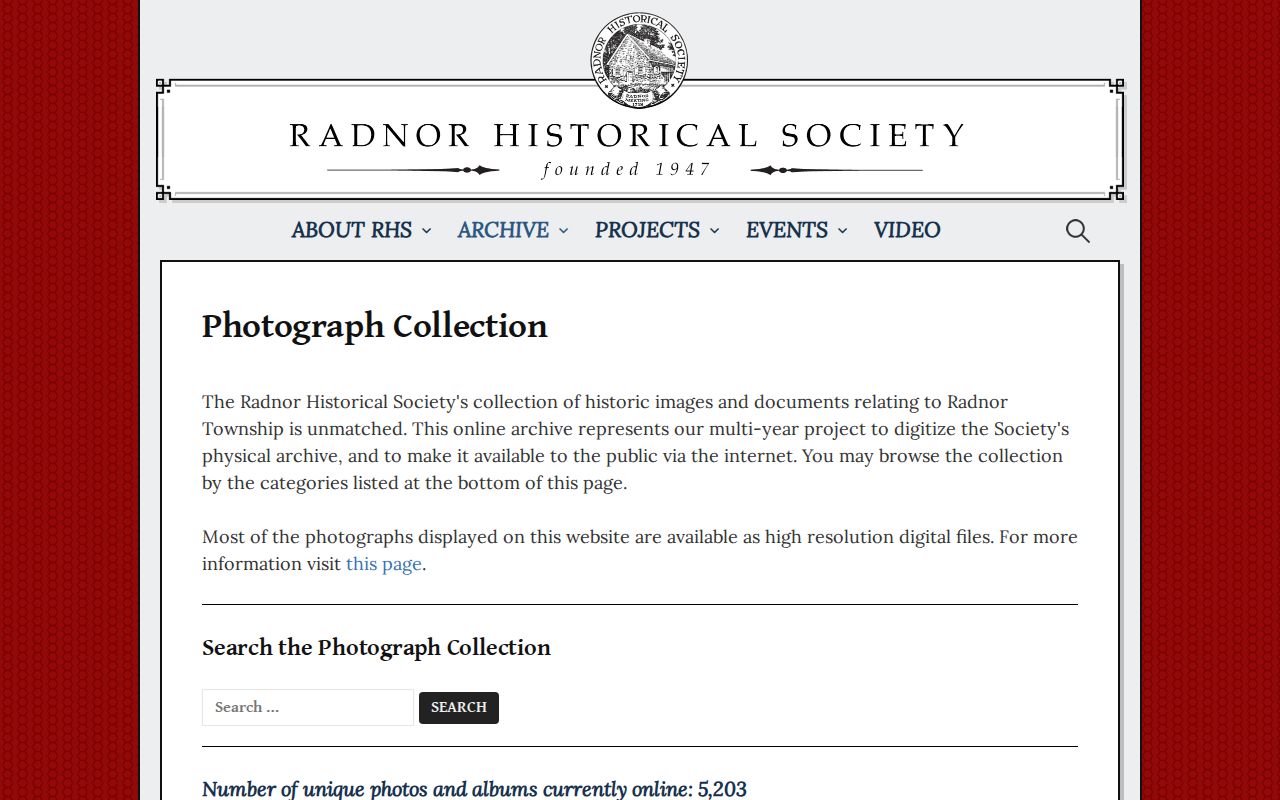
A caption, date, and source must be checked before an image is treated as proof that a named person lived at an address.
Radnor City Directory Library Route
Radnor Memorial Library at 114 West Wayne Avenue is the practical public starting point for a local shelf inquiry. Its public resources confirm catalog, digital-collection, and Delaware County Library System routes, but no exact historic directory run was posted in the reviewed online holdings. Ask staff about local history materials, telephone books, yearbooks, family histories, newspapers, microfilm, and Historical Society referrals. A call number or catalog confirmation is better than assuming a volume is on the shelf.
For a directory clue that points to a public historical birth record, the Pennsylvania State Archives birth-record guide explains its archival research route and pre-1906 alternatives.
Use the archive route only within its public-access rules, and keep a directory entry separate from a certified vital-record request.
Note: Library staff and repository finding aids can identify a source, while the original volume or record supplies the evidence.